Google Maps Driving Directions is a common search for people who want to plan a drive from one place to another. A good route review answers more than “how long?” It also confirms where the trip starts, which roads connect the journey, whether an alternative is more practical, and how to arrive at the right entrance. Taking those steps before leaving can reduce surprises on unfamiliar roads.
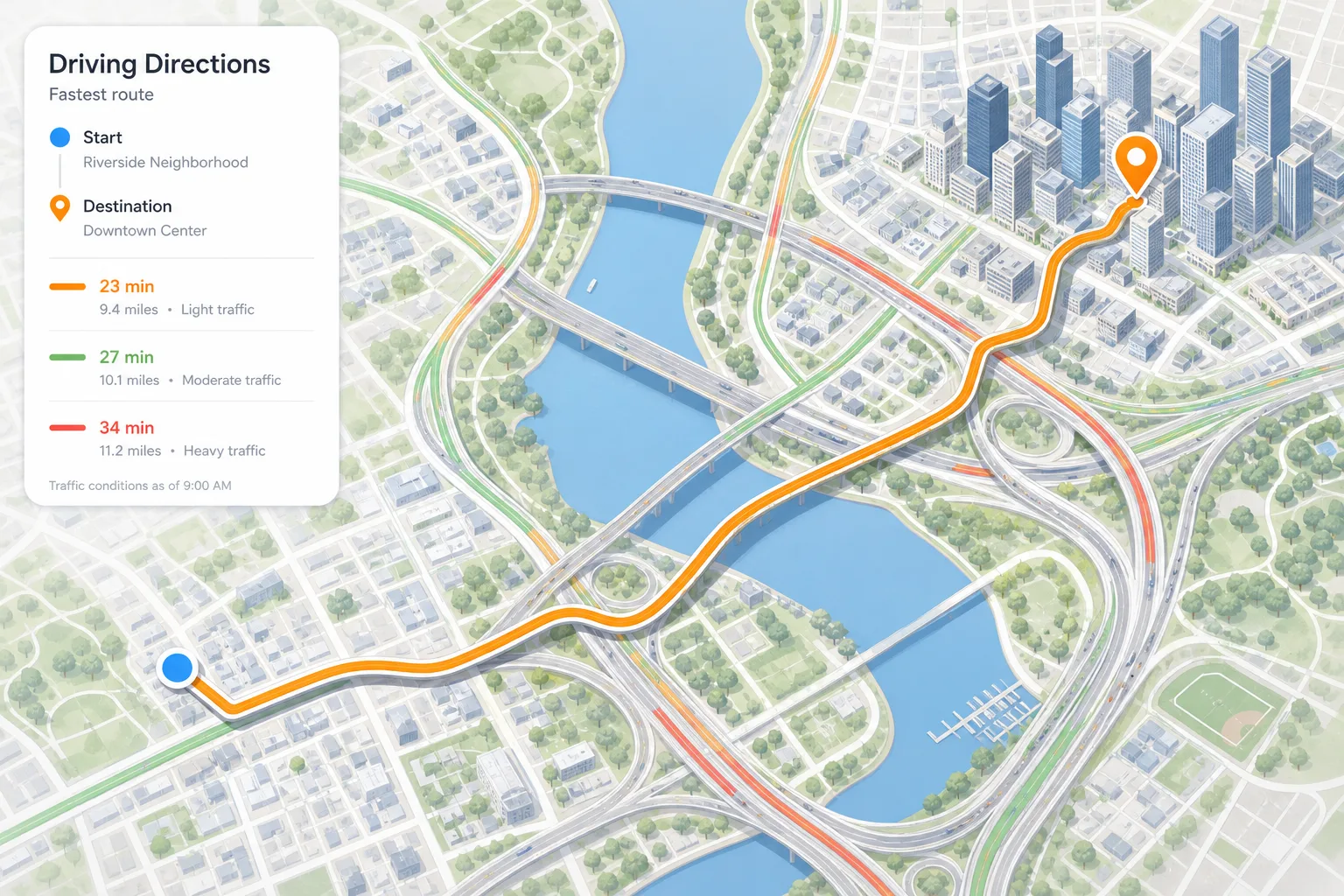
What to review in Google Maps driving directions
A directions result can show the road network, route alternatives, distance, estimated arrival time, and traffic context. The estimate is useful for planning, but it can change with departure time, congestion, incidents, weather, and the route you ultimately select. Think of it as a current planning snapshot.
Start with accurate locations. A street address is usually more reliable than a business name alone, and a destination entrance may matter when you are visiting a campus, airport, mall, or event venue.
How to get Google Maps driving directions
Follow these steps before starting the car. If you are planning for someone else, write the origin and destination clearly so they can verify both locations.
- Open a directions search and enter the starting point.
- Enter the destination, then confirm the address and map pin.
- Choose driving and compare the route options shown.
- Review traffic, tolls, distance, estimated time, and important junctions.
- Set up the chosen route before driving and revisit it only when safely parked.
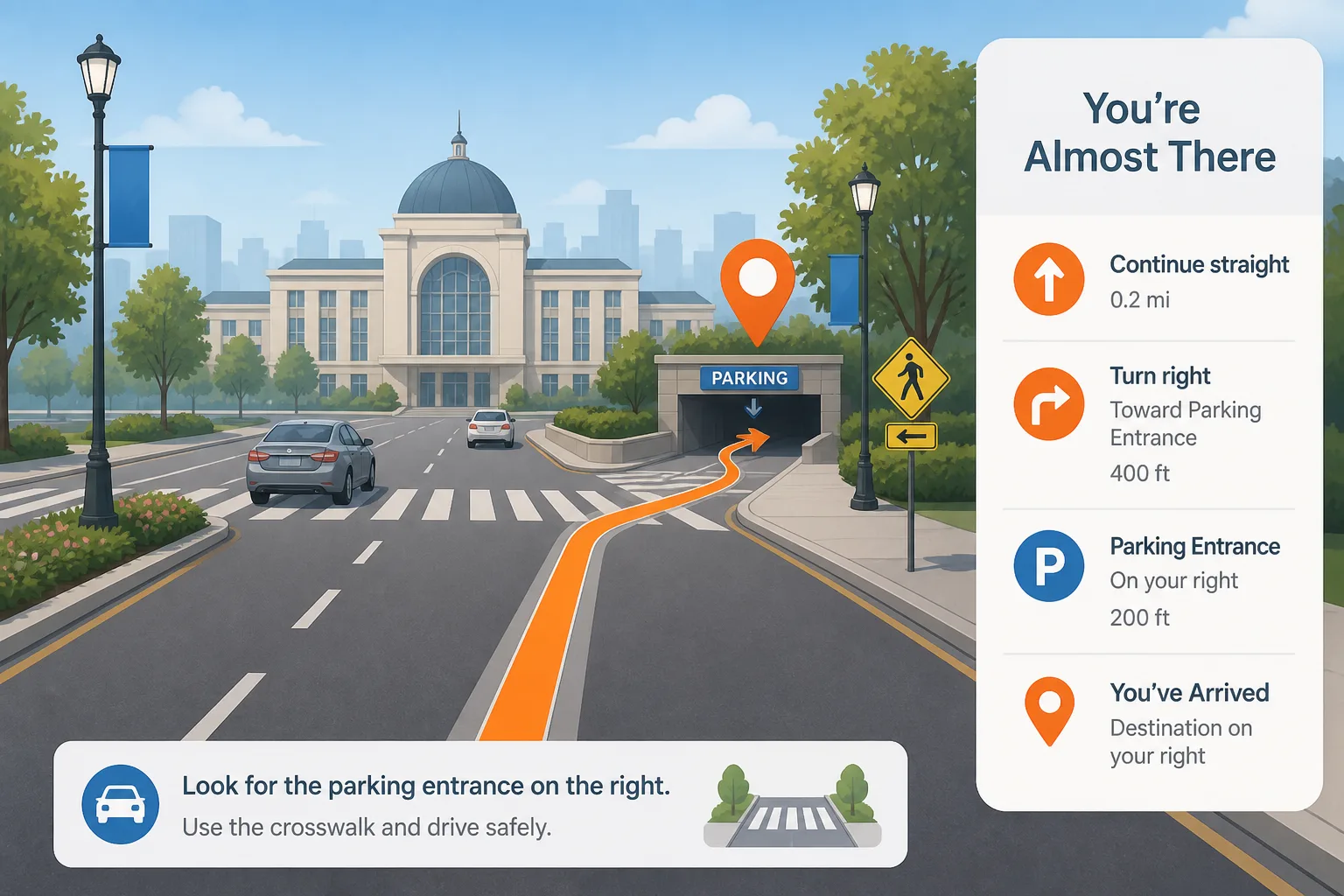
Use traffic and route alternatives wisely
The fastest route may change during the day. A route with fewer miles may take longer through a congested area, while a longer highway route may be easier to follow. Compare the roads, not only the arrival time, and consider whether an alternative includes tolls, difficult merges, or a destination entrance that is inconvenient.
For recurring trips, check the route at the time you normally travel and learn where delays usually begin. Building that knowledge is more useful than memorizing one arrival estimate.
Safety tips for navigation
Navigation works best when it supports attentive driving. Put the phone in a stable position, set the route while parked, and listen for instructions without letting the screen replace your view of the road.
- Obey signs, speed limits, lane markings, and temporary restrictions.
- Leave a buffer for traffic, fuel, parking, and unfamiliar roads.
- Keep an offline or written backup for areas with weak service.
- Pull over safely before changing the destination or route settings.
A better directions habit
Preview the first few turns and the final approach before leaving. Knowing the route shape makes it easier to focus on traffic and road conditions instead of reacting at the last second.
About this Google Maps Driving Directions guide
This is an independent guide for the Google Maps Driving Directions search topic. Google and Google Maps are trademarks of Google LLC, and this site is not affiliated with Google.
Common questions
Google Maps Driving Directions FAQ
How do I review Google Maps driving directions before leaving?
Confirm the origin and destination, compare route choices, check traffic and tolls, inspect major turns and the final approach, then set up navigation while parked.
Why does the arrival time change?
Estimated time can change with traffic, incidents, weather, departure time, route changes, and local road conditions.
Can I use a route alternative instead of the fastest route?
Yes. Compare road type, traffic, tolls, turning complexity, and destination access to choose the route that best fits your trip.