MapQuest driving directions are a familiar way to plan a journey between two places. Whether you are commuting to work, visiting family, finding a business, or preparing for a longer road trip, a good route plan gives you the information you need before you start moving. You can review the roads, estimate travel time, compare alternatives, and identify important turns in advance.
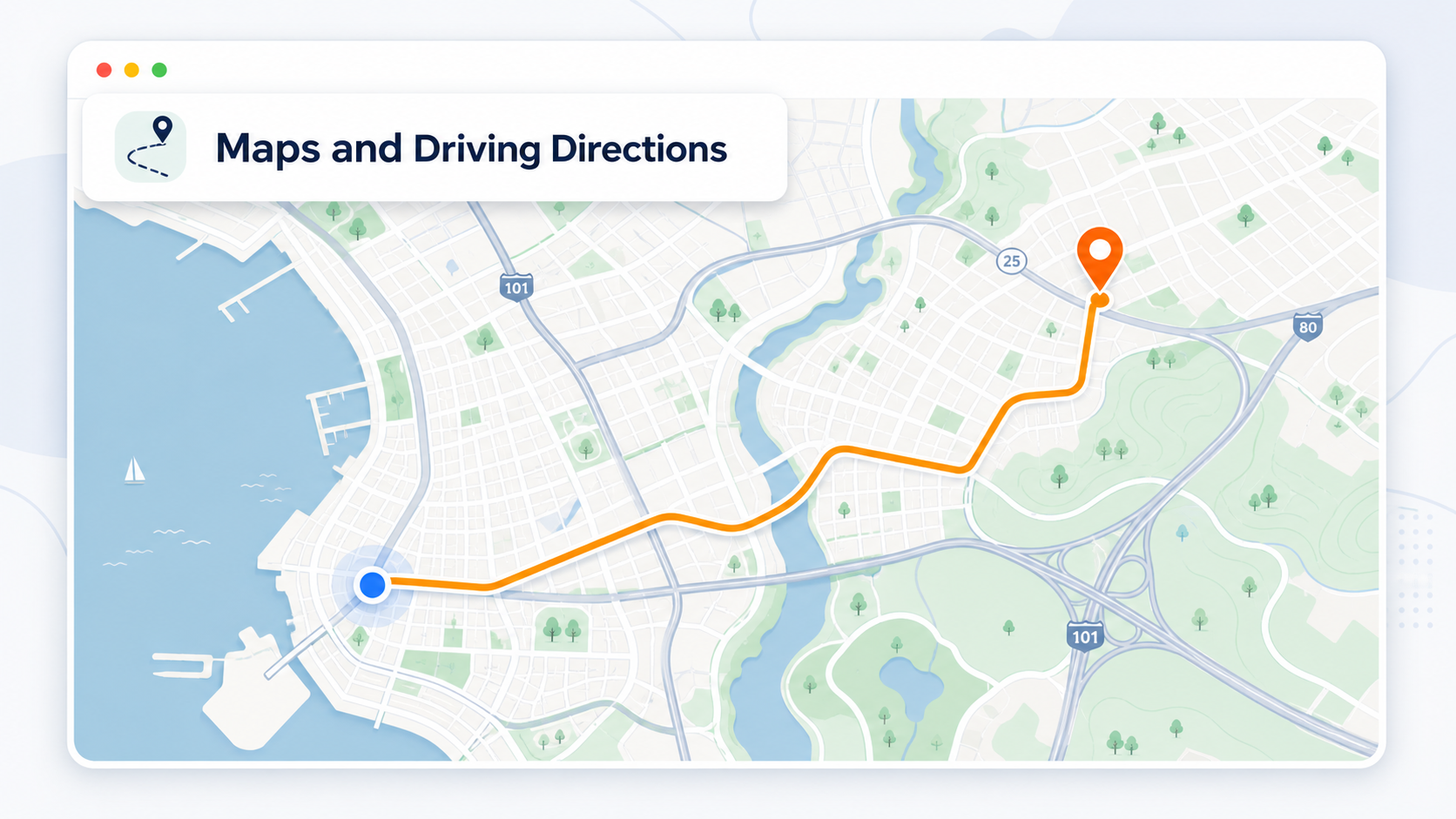
What are MapQuest driving directions?
MapQuest driving directions describe a route from an origin to a destination. A digital map can show the streets and highways that connect the two locations, the approximate distance, estimated travel time, and the sequence of turns along the way. Depending on the mapping product and the information available for your area, you may also see traffic conditions, toll roads, road closures, alternate routes, and nearby places.
The most useful directions are based on accurate location details. A full street address is usually better than a short place name, especially when a business has multiple branches or a city has several locations with similar names. Confirm the starting point as carefully as the destination so the first part of the route is correct.
How to get MapQuest driving directions
Use this simple process when you need directions from one place to another:
- Enter the starting point. Use your current address, a complete street address, a city and state, or a recognizable landmark.
- Enter the destination. Check the suggested location and select the correct address, entrance, or business listing.
- Review the available routes. Compare distance, estimated travel time, major roads, tolls, and the number of turns.
- Choose the route that fits the trip. The fastest route is not always the most convenient, scenic, accessible, or comfortable option.
- Review the first and final turns. Pay extra attention to complicated intersections, highway entrances, and the destination approach.
Before leaving, save the destination and make sure your phone has enough battery. If you are driving, set up navigation before the vehicle moves and avoid typing while behind the wheel.
How to choose the best route
Route selection depends on more than the number shown beside the arrival time. A reliable MapQuest driving directions search may present several ways to travel, so compare the details that matter for your situation.
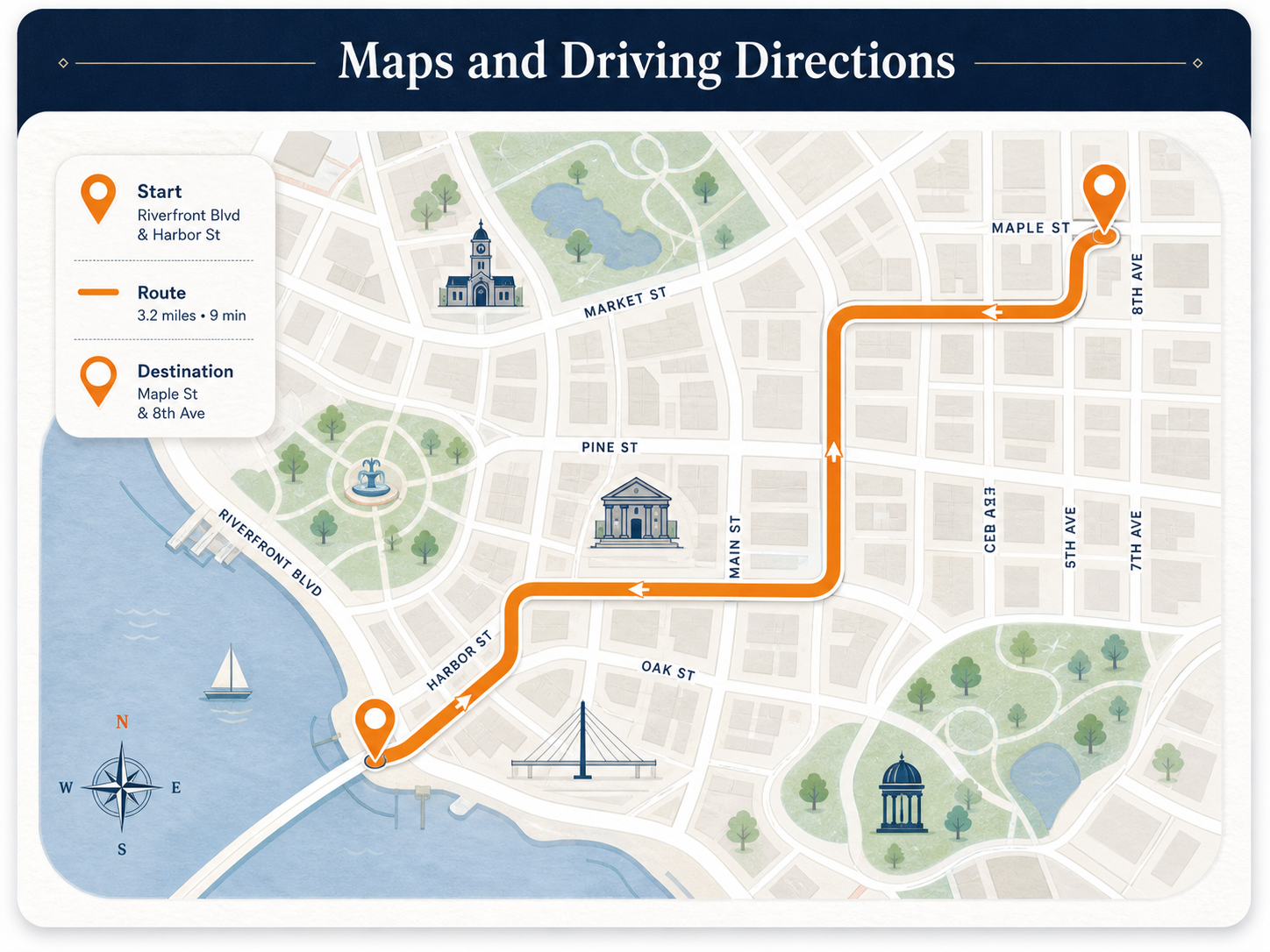
Route review checklist
Check the road type, total miles, estimated time, tolls, steep grades, construction areas, and whether the route passes through places where you can safely stop.
For a short city trip, a route with fewer turns may be easier to follow than one that saves a minute. For a long-distance drive, fuel stops, rest areas, weather, and highway access can be more important than a small difference in arrival time. If you are traveling with children, older adults, a pet, or a vehicle with special needs, plan for comfort and safe stopping places.
Travel tips for safer driving directions
Directions are a planning tool, not a substitute for attention, judgment, or local road signs. Conditions can change after a route is calculated. Give yourself time to respond to traffic, weather, temporary closures, emergency vehicles, and changes in the road environment.
- Check traffic, weather, and road advisories before a long trip.
- Use a complete address and confirm the destination pin before departing.
- Allow extra time for unfamiliar roads, busy city centers, and peak travel periods.
- Keep a backup route or nearby landmark in mind when service may be limited.
- Follow posted speed limits and local traffic laws, even when an app suggests a shortcut.
- Never read or type directions while driving; pull over safely if you need to make a change.
Driving, walking, and cycling directions
Many navigation services support more than driving. Walking directions may prioritize sidewalks, crossings, and pedestrian paths. Cycling directions may consider bike lanes, shared paths, surface type, and steep sections. Choose the travel mode before you compare a route, because the best road for a car may not be the best path for a person on foot or a bicycle.
Check local signs and access rules in every mode. A map can be out of date, and conditions such as construction, private property, seasonal closures, or unsafe crossings may not appear immediately. Use the route as helpful context and make the final decision based on what you can safely see around you.
About this MapQuest directions guide
Maps and Driving Directions is an independent resource for people who want clearer map searches and more practical route-planning habits. We are not MapQuest and are not affiliated with, sponsored by, or endorsed by MapQuest. Brand names are used only to describe the type of map and directions information people may be looking for.
Common questions
MapQuest Driving Directions FAQ
What are MapQuest driving directions?
MapQuest driving directions are route instructions that help you travel from a starting point to a destination. A mapping service can show possible routes, road names, distance, estimated travel time, and useful location context before you begin.
How do I get MapQuest driving directions?
Enter a complete starting point and destination, check that the suggested locations are correct, select a route, and review the major roads before you leave. For live traffic and turn-by-turn guidance, use a current navigation service with location access.
Can I get walking or cycling directions too?
Many modern map services support driving, walking, cycling, and public-transit route planning. Choose the travel mode that matches your trip, then review the route for distance, safety, road access, and local conditions.
Is Maps and Driving Directions MapQuest?
No. Maps and Driving Directions is an independent information resource and is not affiliated with, sponsored by, or endorsed by MapQuest. This page explains how to plan routes and use mapping tools responsibly.