A MapQuest Route Planner search usually reflects a practical need: you have more than one place to visit and want to understand the order, distance, and time involved. A route planner can help you turn a list of errands or trip stops into a sequence worth reviewing. The strongest plan balances driving time with opening hours, fuel, traffic, parking, and the amount of time you want to spend at each stop.
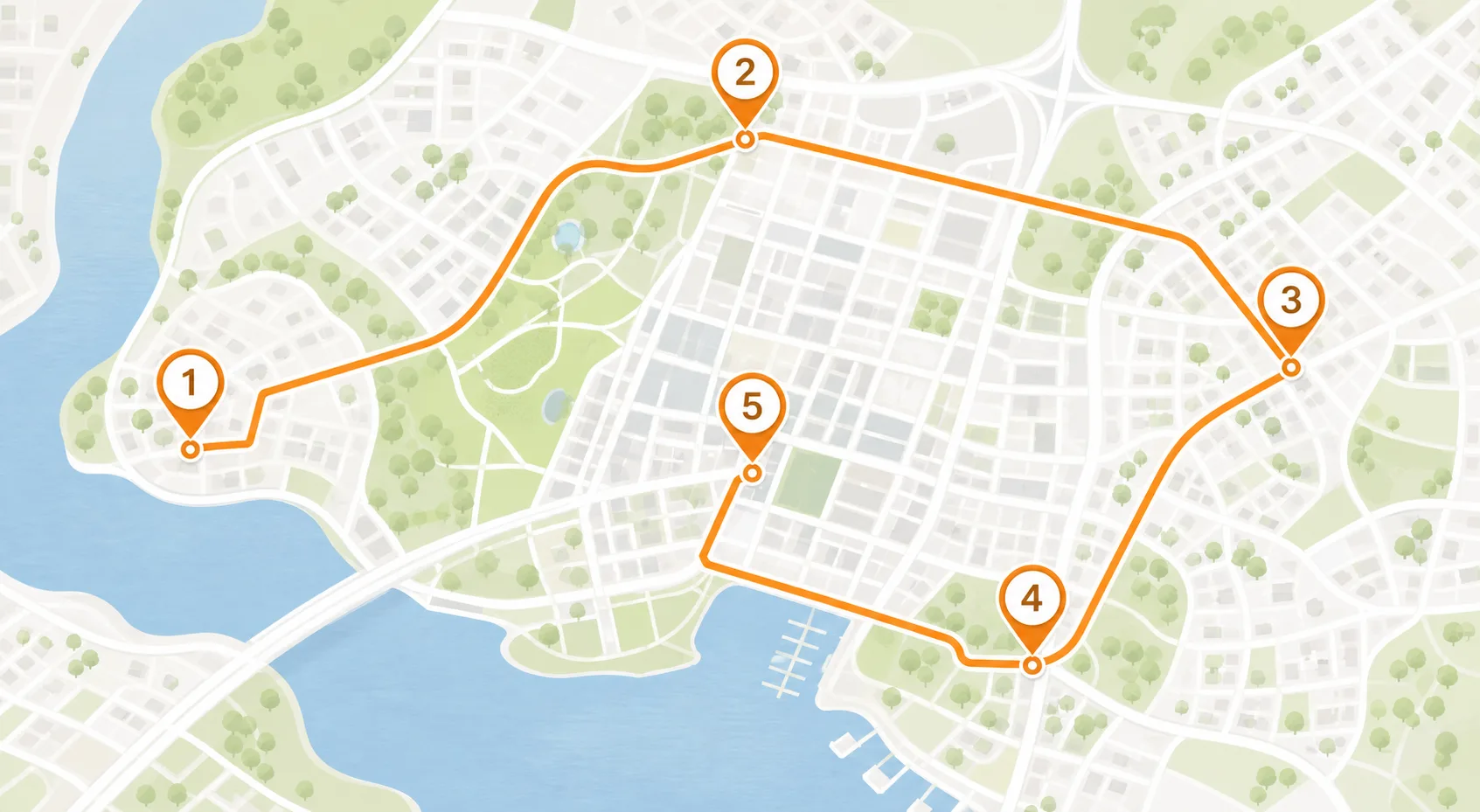
What a MapQuest Route Planner helps you organize
A route planner is useful for delivery runs, family visits, open-house tours, weekend travel, and any day with several stops. It gives you a way to view the trip as a whole instead of calculating every leg separately. That larger view can reveal backtracking, a better stop order, or a rest and fuel break that should be added before the day begins.
Treat the first calculation as a draft. A route can be technically short but impractical if it crosses a busy center at the wrong time or leaves you searching for parking at every stop.
How to build a multi-stop route
Start with the locations that cannot move, such as a timed appointment or a hotel check-in. Then place flexible errands around those anchors. Confirm each address individually so a similarly named business does not send the entire route in the wrong direction.
- Write down every stop and note appointments, opening hours, or delivery windows.
- Enter the origin and the fixed destinations first, then add flexible stops.
- Compare the proposed order with your real priorities and likely traffic periods.
- Add fuel, meal, rest, parking, or charging stops where the trip needs them.
- Save the final plan and review each leg before departure.
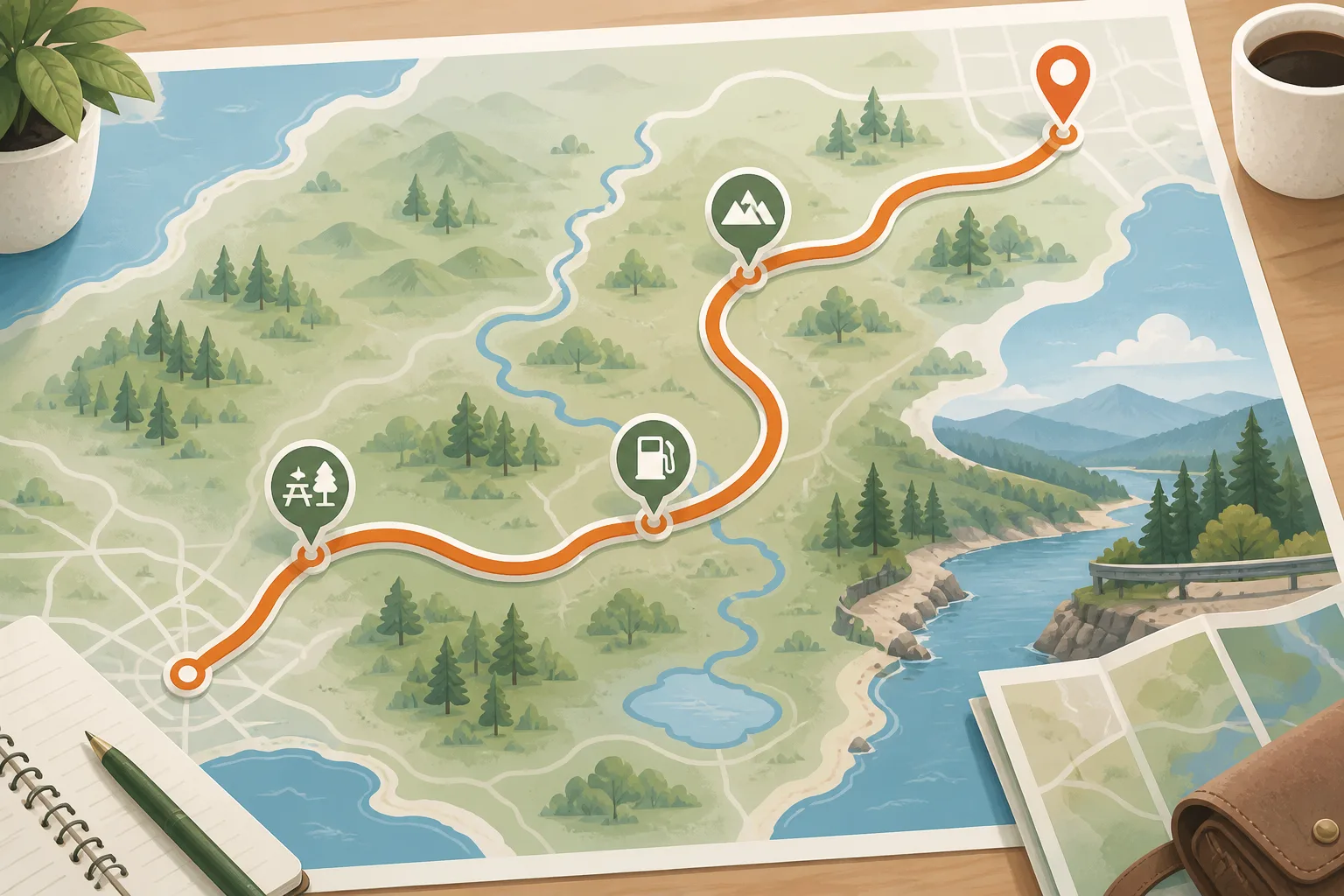
Route order is a planning decision
The shortest total distance is not always the best itinerary. A good order may reduce left turns, avoid returning through the same neighborhood, keep a time-sensitive stop first, or place a fuel stop before a remote section. For a long drive, also consider fatigue and the location of safe rest areas.
- Group nearby stops when their timing allows.
- Protect appointments with a realistic arrival buffer.
- Check whether a stop has a separate entrance or parking address.
- Keep an alternate plan for closures, traffic, or an unavailable destination.
Route planner habit
Build the itinerary around real-world constraints first, then use distance and estimated time to refine the order. A plan that is easy to execute is often more valuable than one that saves a few miles.
About this MapQuest Route Planner guide
This independent page explains the MapQuest Route Planner search intent without claiming to be the official MapQuest product.
Common questions
MapQuest Route Planner FAQ
What is a MapQuest Route Planner used for?
It can help organize a trip with multiple destinations, compare total distance and time, and review the order of stops before you travel.
Can I plan several stops in one trip?
Many route-planning tools support multiple stops. Enter each location carefully, confirm the order, and adjust the plan for appointments, parking, fuel, and rest breaks.
Should I always choose the shortest route?
Not necessarily. Traffic, tolls, road type, parking, weather, turning complexity, and the timing of each stop can make another route more practical.